Written by: Brian Barakat, Esq.
As artificial intelligence makes it easier than ever to draft complex-looking legal documents in seconds, courts across the country are bracing for a surge of AI-generated, pro se (representing oneself without an attorney) lawsuits. Florida is tackling this head-on. The state legislature recently updated the Florida Vexatious Litigant Law (Florida Statute § 68.093), arming targets of meritless litigation with powerful defense mechanisms to halt bad-faith actors before they drain a defendant’s time and wallet.
If you are a business owner, an individual facing a relentless self-represented opponent, or a practitioner navigating these shifts, here is a breakdown of what the updated statute says, who it targets, and how it protects defendants.
Who is a “Vexatious Litigant”?
The core of the statute relies on a specific definition. To be labeled a vexatious litigant under Florida law, an individual must be proceeding pro se and meet at least one of the following criteria:
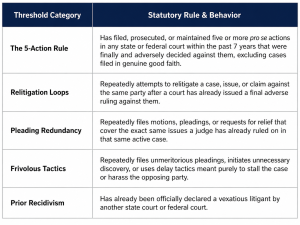
The Two Most Powerful Weapons for Defendants
When facing an opponent who fits these descriptions, the statute gives you two primary paths to shut down the abuse:
I. The Right to Demand “Security” (Upfront Funding)
Under Section 68.093(3), any party facing a vexatious litigant can file a motion asking the judge to force the pro se filer to post security (usually a cash bond or undertaking).
To win this motion, you must show the court two things:
- The opponent meets the definition of a vexatious litigant.
- They are not reasonably likely to win their case on the merits.
The immediate benefit to you: Simply filing this motion automatically stays (freezes) the entire lawsuit. You do not even have to answer the original complaint or respond to discovery requests until 10 days after the judge rules on your security motion. If the judge orders them to post the bond and they fail to do so, a pro se plaintiff’s case is automatically dismissed with prejudice. If they are a defendant acting abusively, the court can strike their pleadings or hand you a default judgment.
II. The Prefiling Gatekeeper Order
Under Section 68.093(4), a judge can issue a prefiling order. This acts as an administrative lockout. Once entered, the vexatious litigant is completely barred from filing any new pro se lawsuits within that judicial circuit without first getting explicit permission (“leave of court”) from a judge.
The clerk of court is required by law to reject their filings unless a judge has signed off, showing the new lawsuit is actually meritorious and not designed to harass. Furthermore, the clerk sends these orders to the Florida Supreme Court, which maintains a master registry of all declared vexatious litigants in the state.
The Bottom Line
Generative AI tools are a massive win for legal accessibility, but they also lower the barrier to entry for high-volume, low-merit harassment. Florida’s updated framework strikes a necessary balance. It leaves the courtroom doors open for legitimate litigants while giving everyday citizens and businesses a swift, statutory shield to freeze and dismiss automated legal bullying before the defense costs pile up.
If you find yourself trapped in a litigation loop with a self-represented party using these tactics, remember that you don’t have to keep playing defense—the law gives you the right to demand they pay to play.
Brian Barakat is a Board-Certified Business Litigator and Co-Founder of Barakat + Bossa PLLC. With a background in prosecuting complex financial fraud and a career built on high-stakes commercial litigation, he brings strategic insight and courtroom experience to every matter. His practice focuses on resolving business disputes efficiently and effectively, with particular emphasis on fiduciary litigation, restrictive covenants, and fee recovery. He may be reached at barakat@b2b.legal.
This post is intended to provide general information regarding Florida’s Vexatious Litigant Law and related developments in civil litigation. It does not constitute legal advice. For guidance tailored to your specific situation, please contact our team directly.